
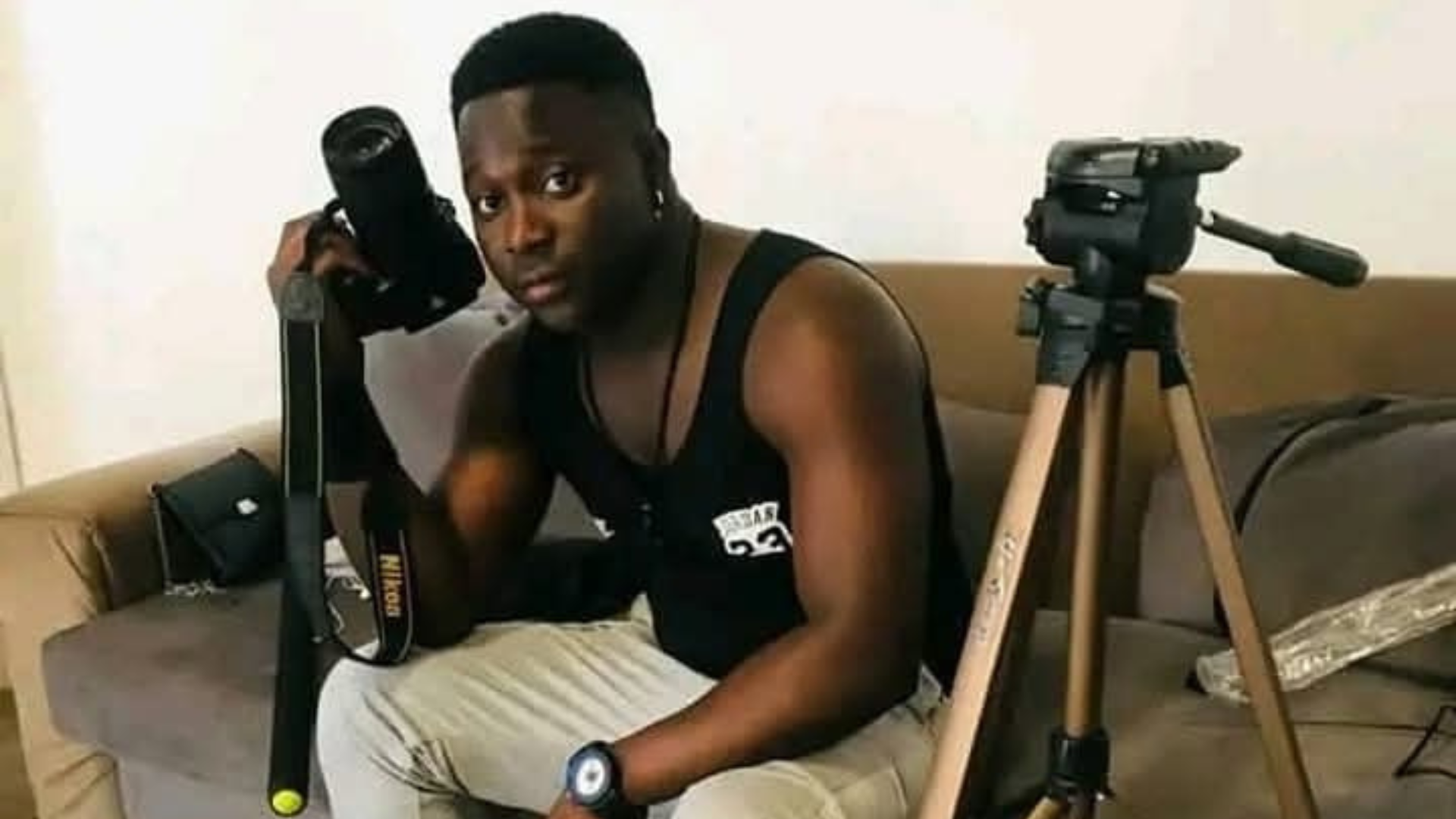
There is a version of Tabe Wesley's life that almost happened. In it, he spends years sitting in science classrooms in Cameroon, memorizing periodic tables and studying formulas, all in devotion to a father he never met. His dad, absent since Tabe was four months old, wanted his son to be a doctor. So that's who Tabe tried to become.
"My mom was always telling me, ‘your dad was very happy when we had you, and he has always wanted you to be a doctor’," Tabe recalled. So he carried that inherited dream all the way into advanced level science courses. But after sitting for science exams and failing twice, the path he was actually made for finally came into view.
Today, Tabe A. Wesley is a filmmaker, actor, screenwriter, director, and entrepreneur based in Buea, in the English-speaking southwest region of Cameroon. He is the founder and director of High Creative Film Academy, the only film academy of its kind serving English Cameroon, and he’s the director of the NGO Hope for All International Youth Foundation (HOFAIYF), which supports creatives across the continent. He manages talent, writes scripts, trains actors in Nigeria, Uganda, and Egypt, and is completing his first book, The Creative Compass: How to Navigate the Creative Industry in Africa. He is also producing the AfroLens Podcast, which he envisions as a bridge connecting African creatives with the global diaspora.
None of that would exist if Tabe had become the doctor his father wanted, and the move that made all of it possible wasn't a single dramatic decision. It was a lifelong practice of owning his identity and telling his story, even when the world around him had very different plans.
The Weight of Someone Else's Dream
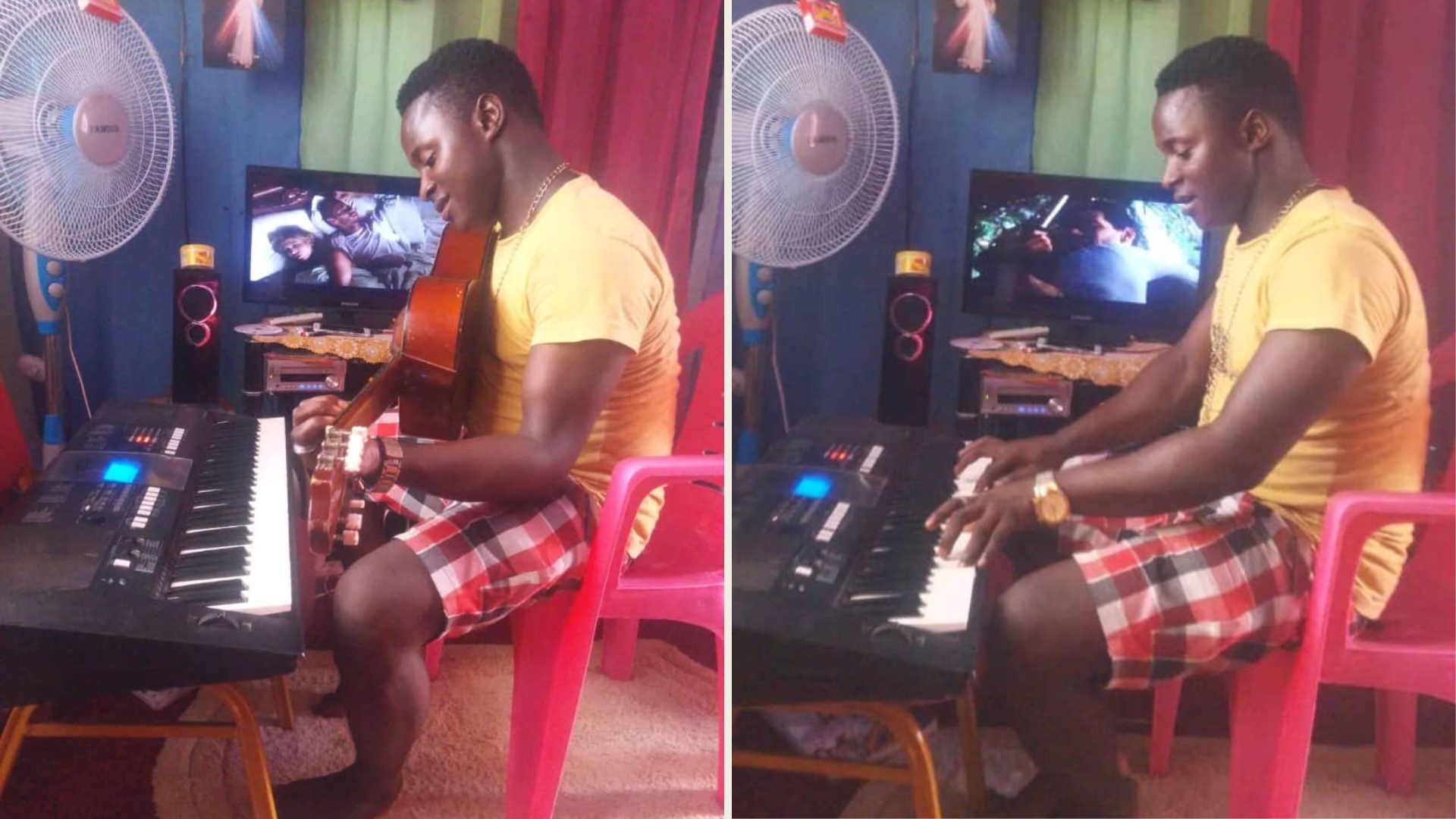
Growing up in Fotabe, a village in the upper bayang subdivision of Cameroon, Tabe was raised by his mother, a headmistress and devoted Presbyterian who channeled her children's energy into church life. She pushed Tabe to every Sunday rally, drama competition, and dance performance at the regional church gatherings, and that’s where he thrived.
"I didn't really regret the time I wasted trying to be a medical doctor," he said. Looking back, Tabe can trace the creative wiring that was always there. The way he lit up in physics when they used batteries to power lights because, as he'd later understand, he was learning to be a gaffer on a film set. The way mathematics turned out to be exactly what a cinematographer needs to calculate frame ratios and camera angles. "Because I think all along, I had a lot of things I had to learn,” he continued. “It was God telling me, ‘you need to be a creative person.’”
When One Door Closes
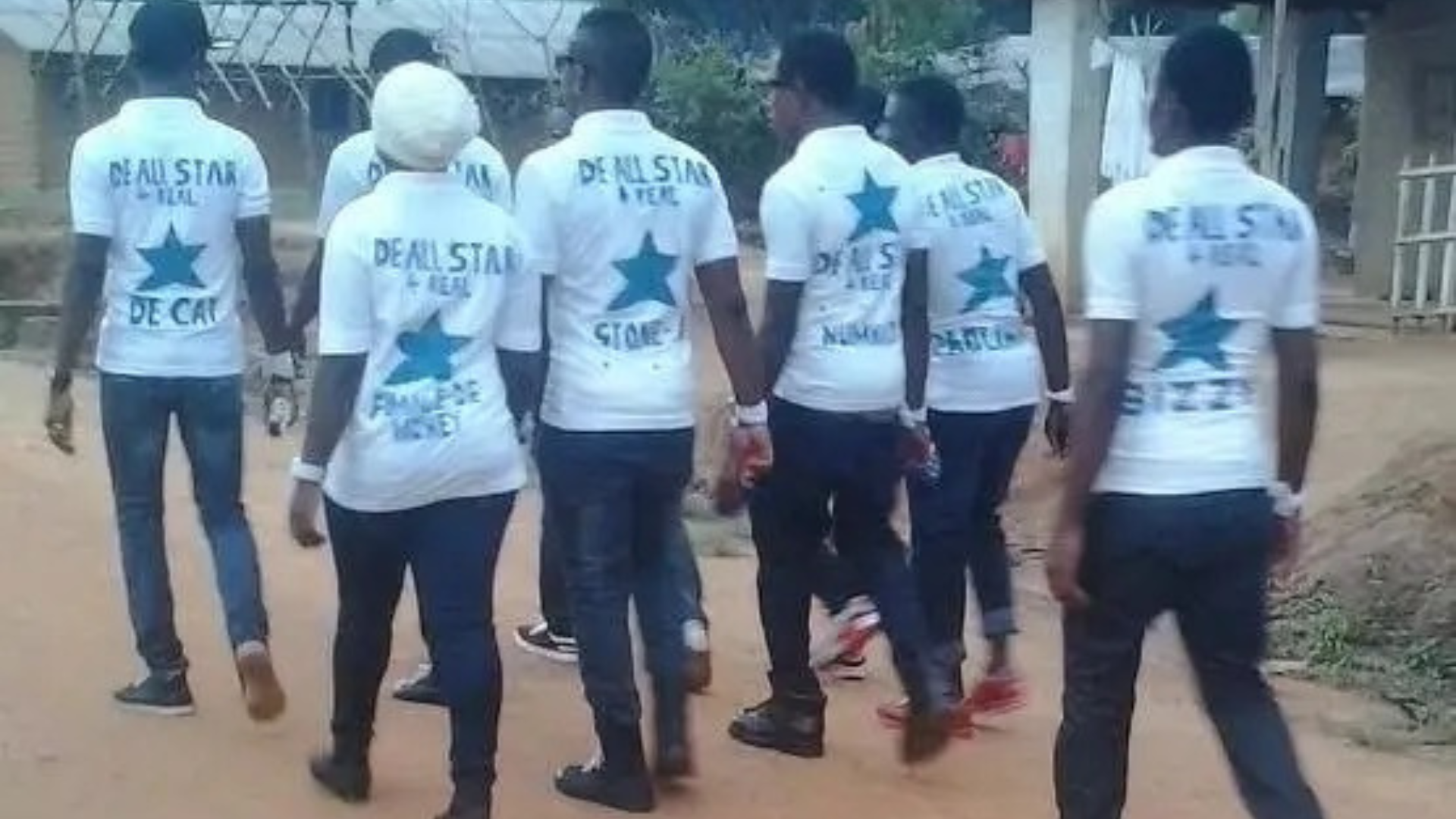
After choosing the arts and earning his degree in Performing and Visual Arts from the University of Buea, Tabe entered the entertainment world as a dancer. He created a crew called The All Stars, built a roster of choreographers, and performed for music video shoots across his city. He was good at it. So good that when his city organized a major televised event, they invited his crew to perform.
There was just one problem. Tabe had just had emergency surgery for appendicitis, and his doctors told him not to dance. But he danced anyway, causing him to eventually be hospitalized again. This time, the doctor's order was no physical activity for six months.
During those six months, Tabe had nowhere to put his energy except film. He went so deep into directing, writing, and cinematography that when the six months ended, there was no going back. "I was just like, okay, let me leave this thing alone," he said of dancing. "So that's how I left, and I found myself being a filmmaker."
It's easy to frame this as a pivot forced by circumstance, but Tabe had always been following signals long before this point. As a dancer, he was always behind the camera at church rallies. On video sets, he kept reaching for the camera because the actual videographer wasn't shooting it right, and he’d been stage-managing dramas in his congregation since he was a child.
Building What Doesn’t Exist
Even though Tabe has found a way, the reality of being a creative in English Cameroon isn’t an easy one. Cameroon is a bilingual country; English-speaking in two regions, French-speaking in eight, and it’s effectively governed by French law, which Tabe says consistently fails to prioritize English Cameroonian voices. Tabe saw this and decided that if English Cameroon didn't have what it needed, he would be the one to build it.
He traveled to Nigeria to study at High Definition Academy for eighteen months. When he returned to Cameroon, he established the High Creative Film Academy, with instructors in Nigeria, Kenya, Uganda, and Egypt to reach students continent-wide. "For us to go global, we need to connect with other parts of the world," he explained. "We really don't need to cage ourselves. We have to relate with people across borders."
Since then, Tabe has won a 2.4 million CFA grant with a team of creatives for a film project by pitching a story to an NGO working with geography. He managed a comedian who eventually relocated to the United States after building an online following, and he’s now developing Script Pump, a platform to connect Cameroonian writers with international producers and funders; helping storytellers reach audiences they couldn't access alone. He also holds roles with the National Actors Guild of Cameroon and the Cameroon International Film Festival.
The Story He's Determined to Tell
Everything Tabe builds circles back to the same conviction: Africa's stories are not being told the way they deserve to be told, and the people most capable of telling them are often being blocked — by governments, platforms, and funding structures that weren't designed with them in mind. "I want to be that person who can rewrite the stories and put them the way the ancestors have always wanted them to be," he said. "Our continent is a very beautiful continent and very rich, but it's not been painted the way it's supposed to be."
Tabe’s longer-term vision is to one day become Cameroon's Minister of Arts and Culture and to use that position to change what funding, recognition, and opportunity actually look like for creatives in his country. "I feel like there's a point where Cameroon needs people who could make decisions that can favor creatives," he said. When asked if that vision scares him, he didn't hesitate. "I get scared. Sometimes I see it, and I get scared."
Which, if you've ever stood at the edge of something that was clearly yours to do, is probably the most honest thing anyone can say.

What Tabe's Moves Teach Us
Tabe's story is as compelling as it is instructive. Whether you're navigating a career pivot, building something new, or simply trying to find your own vision and path, here are a few of his moves you can steal.
Your detours are not distractions. Tabe failed his science exams twice and spent years studying subjects for a life he wasn't meant to live. But what felt like wasted time was actually specific preparation for the work he was born to do.
Owning your identity is a strategic act. Tabe didn't position himself as a filmmaker who happened to be Cameroonian. He made his identity the entire point, building an academy that specifically served his community, pursuing stories that represented his continent, and moving toward government so that policy could finally match the people.
If something doesn't exist, build it. English Cameroon had no film academy, so Tabe built one. His region's stories weren't reaching producers, and now he's building a solution for that, too. This is another move that repeats across everything he does: identify the gap, then fill it.
Fear is normal, so do it scared. "I get scared," Tabe said of his biggest ambitions. He hasn't mistaken that fear for a stop sign. He reads it as confirmation he's on the right path.
The Move That Carries Everything
From the outside, it might look like Tabe build a career on a series of closures; paths that didn't work out or had to change. But from the inside, it was actually a man who kept choosing himself, telling his story, and building the spaces his community needed, one closed door at a time.
"I wish someone had told me to believe in myself," he said. "I lived my younger life feeling like this thing is not going to be good, people are going to laugh at it." He's not living that way anymore, and the entire continent’s stories, creatives, and the next generation of filmmakers and artists are better for it.
If you're sitting with a version of your career or life that someone else imagined for you, take note: the path you were told to take and the path you were built for are rarely the same one. The move is learning to tell the difference, then having the courage to take a step in the right direction.
-
Move in purpose, on purpose. The Purpose Post tells the stories of creatives and founders who stopped waiting for permission and made their move. If you're already in motion, or getting ready to be, you belong here. Join us. 👇🏾


